Picture a good week. Three strength sessions, Monday, Wednesday and Friday. A forty-minute walk on Tuesday, another on Thursday, a long one with a friend on Sunday. Six days of moving on purpose.
Now picture how most training logs remember it: three workouts. The walks happened, they took real time, and they vanished. Do that for a few months and you learn something nobody set out to teach you. Only the hard days count.
That lesson is wrong, and it costs more than it looks.
What gets logged becomes what matters
A log is not a neutral record. Whatever it chooses to keep, you start treating as the real work, and whatever it drops starts to feel optional. If the only sessions with a place in the record are the ones that leave you sweating, the easy ones become the first thing cut on a busy day. Not because you decided they were worthless. Because nothing you look at ever said otherwise.
The trouble is that the easy days are most of the week. For many people they are most of the movement. They are also what holds the hard days together: a walk the day after heavy squats keeps the legs moving, gets you outside, and keeps the habit of doing something every day intact when a full session is not on the cards.
There is a quieter cost too. A record that only counts intensity rewards all-or-nothing thinking, where a week without three hard sessions feels like a week lost, and the twenty minutes you could have done gets skipped because it was not the hour you planned.
The guidelines dropped the ten-minute rule
Public health advice used to have its own version of this. The US Physical Activity Guidelines once counted moderate activity only in bouts of at least ten minutes, as if anything shorter did not happen. The second edition, in 2018, dropped that requirement. The message became simpler: move more and sit less, and any amount of moderate activity counts toward the weekly target of 150 to 300 minutes.
Brisk walking is the standard example of moderate activity. A forty-minute walk on three days covers most of the low end of that range on its own, before a single weight is lifted.
Step counts point the same way. A large pooled analysis of step data and mortality found that more daily steps went with a lower risk of death, with the benefit leveling off somewhere in the high thousands, sooner for older adults than younger ones (Paluch, 2022). Most of those steps were never part of anything anyone would call a workout. They were errands, commutes and walks.
None of this makes hard training unnecessary. Strength work does things a walk cannot, and so do intervals. The point is narrower: the easy minutes are not filler between the real sessions. They are a large share of what the evidence actually measures.
How Wave counts a walk
In Wave Wellness, every session you log has a type: Strength, Zone 2, Intervals, Mobility, Sport, Walk or Other. Walk is there on purpose, as its own choice rather than tucked under Other, and the app’s own hint for it reads “a real walk, counted on purpose.”
You can log one in a sentence through Wave AI, “forty-minute walk after dinner”, and nothing is saved until you tap Log. If you wear an Apple Watch, workouts it records arrive in Move on their own, so the walk you started on your wrist does not need typing at all.
A logged walk then counts where it should:
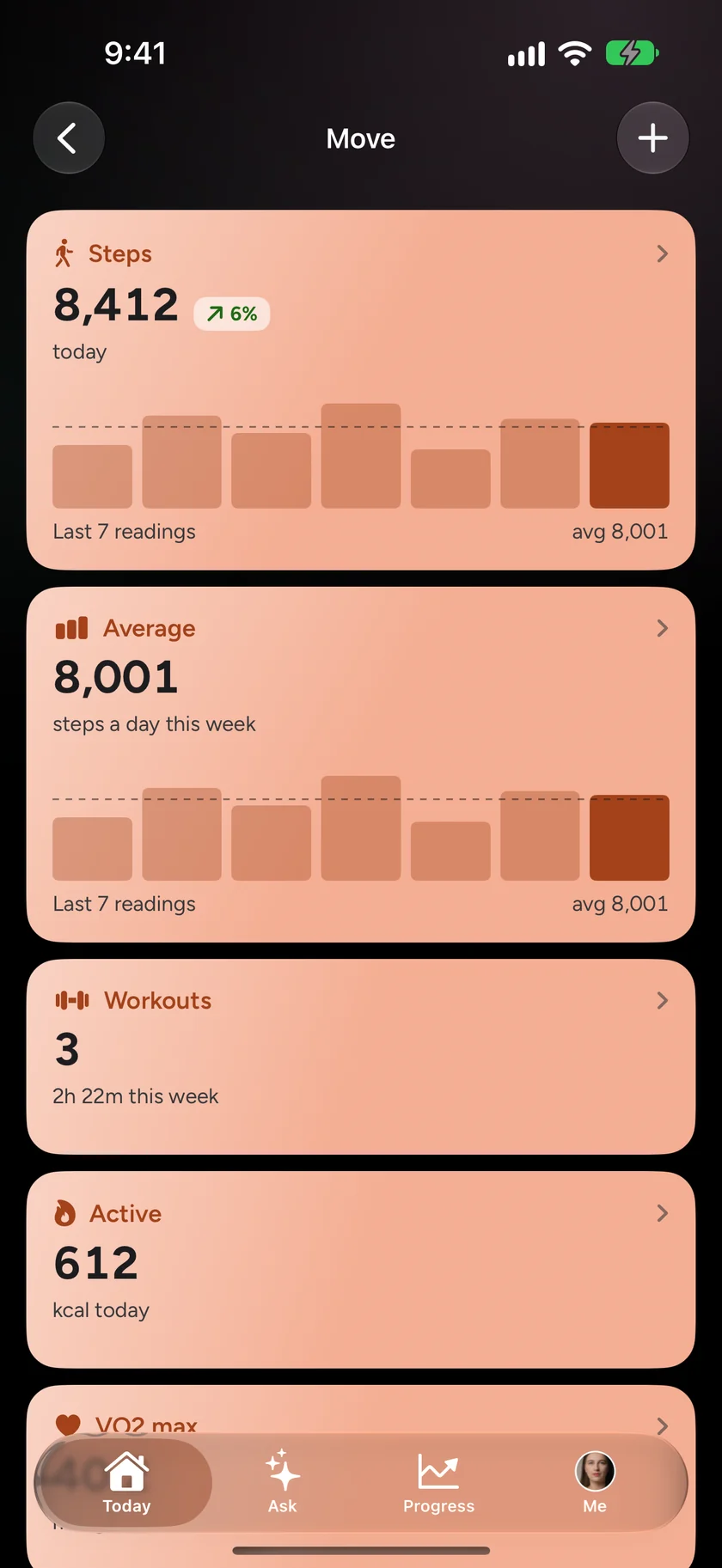
- Your weekly goal. Workouts a week is one of the goals you can set, with three as the default. It counts the sessions in the last seven days, and a walk is a session. A lift your watch also saw counts once, not twice.
- Wave Age. Wave Age includes cardio minutes among its lifestyle inputs, and walk minutes are part of that total, beside your daily steps.
- Your steps. A steps goal (8,000 by default) averages your last seven days, so a long Sunday walk lifts the week rather than just one bar.
What a logged walk will not tell you
Counting a walk honestly does not make it a hard session. Wave records what kind of session it was and how long it took; it does not pretend a stroll trained your heart the way intervals do, and it cannot tell a brisk forty minutes from a slow one unless your watch says so. If every session in a week is a walk, the record will show a full week of moving and very little of anything else, which is exactly the point: the record should show you what you did, not flatter it.
Nor is more always better on a log. A goal set at fourteen sessions a week will push you to log anything that moves. Set the goal for the week you want to have, and let the walks fill it honestly.
The idea works without any app. Write the walks down. Give the easy days a line in whatever record you keep, and notice how much harder they become to skip once they have one. The hard sessions build the fitness. The easy ones are usually what keeps you showing up for them.
Wave Wellness is free on the App Store and Google Play. Download it and see your own week of movement today.