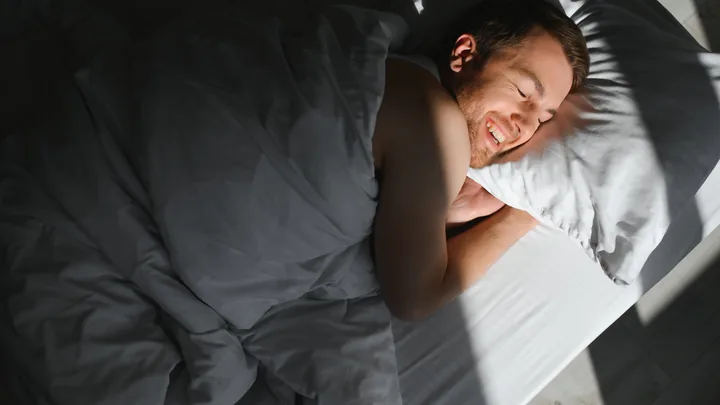
Ask a sleep researcher for the single change with the best return, and a surprising number will not talk about the evening at all. They will tell you to go outside in the morning.
The clock needs a signal
The body’s clock runs a little longer than 24 hours on its own. Left alone, it drifts later each day, which is why a week off can leave you going to bed at 2 and wondering what happened. Something has to reset it every morning, and that something is light. Specifically, bright light hitting the eyes in the first hour or two after waking.
Daylight does the job in a way indoor light cannot. A well-lit office sits at a few hundred lux. An overcast morning outside is several thousand. A clear one is tens of thousands. The cells in your eye that talk to the clock respond to that difference, and a few minutes of the real thing tells the body, firmly, that the day has started.
What it changes
The effects arrive at the other end of the day. A morning signal at 7 sets up melatonin to rise at about 10 that night, which means falling asleep faster and sleeping more solidly. It also brings the morning cortisol peak forward and sharper, which is what makes you feel awake rather than dragged out of bed, and it takes the edge off the low mood that a dark winter morning brings for a lot of people.
In the record it shows as a tighter sleep schedule, an earlier natural bedtime, and over a few weeks a resting heart rate and a morning scan that look steadier.
How much, and how
Ten minutes on a bright day, twenty or thirty on a gray one, within an hour of waking, outside. Through a window does not count for much; glass cuts the useful part of the light by most of its strength. Sunglasses do the same, so leave them off for this part, and never look at the sun itself.
The simplest way to make it happen is to attach it to something you already do. Coffee on the step instead of at the counter. The dog’s walk before the phone. The first call taken outside. If you commute, the part between the car and the door counts, so take the long way across the lot.
The other half
The morning signal works best when the evening is dimmer. Bright screens and overhead lights late at night tell the clock the day is still going, which is exactly what you spent the morning correcting. Lower the lights after dinner, and keep the phone at arm’s length in the last hour if you can. Wave’s evening check-in is a reasonable moment to put it down.
Wave is for general wellness. It is not a medical device, and it does not diagnose or treat sleep disorders or mood conditions.