Your body starts getting ready for sleep a couple of hours before you do, and the first thing it does is let go of heat. Core temperature drifts down in the evening and keeps falling into the night. Sleep tends to arrive on that slope, not at the bottom of it.
So the temperature of the room you sleep in is not a comfort setting. It decides how easily your body can do the one thing it needs to do first.
Sleep starts in your hands and feet
The heat has to go somewhere, and it leaves mostly through the skin of the hands and feet. In the evening the small vessels there open up, warm blood reaches the surface, and the heat moves out into the room.
A small study in Nature made the link unusually clear (Kräuchi, 1999). The researchers tracked skin and core temperature in volunteers through the evening. The best predictor of how fast people fell asleep was not core temperature itself but how warm their hands and feet had become compared with their trunk. Warm extremities, quick sleep.
That also explains a piece of advice that sounds backward. A warm bath or shower an hour or two before bed helps people fall asleep faster, according to a review that pooled the studies on it (Haghayegh, 2019). The bath draws blood to the skin, and once you step out, the heat leaves quickly and core temperature drops. The warmth is the setup; the cooling is the point.
What a warm room does
A warm, still room slows that heat loss down. The skin keeps sending heat out, but the air around it is not taking much in, so the drop the body is aiming for comes slower and shallower.
A review of the research on heat and sleep found that warm conditions increased time awake during the night and cut into slow-wave and REM sleep, the deep and dreaming stages (Okamoto-Mizuno, 2012). Humidity made it worse, because sweat that cannot evaporate does not cool anything. The same review found that people are better at sleeping through mild cold, as long as the bedding is warm, than through heat.
Most of that damage does not wake you fully. A warm night is more brief wake-ups, more time in light sleep and less in deep sleep, and very little of it is remembered. You wake up having slept “fine”, just not well, and the room is rarely the suspect.
Sleep guidance commonly puts a good bedroom somewhere in the mid-60s Fahrenheit, cooler than most people keep the rest of the house. Take that as a starting point rather than a rule. The right number depends on your bedding, what you wear and who else is in the bed.
What Wave can and cannot see
Wave Wellness has no idea what your thermostat says. There is no room sensor in it, and it will not pretend otherwise. What it does have is the record of how your nights went, which is where a warm room shows up.
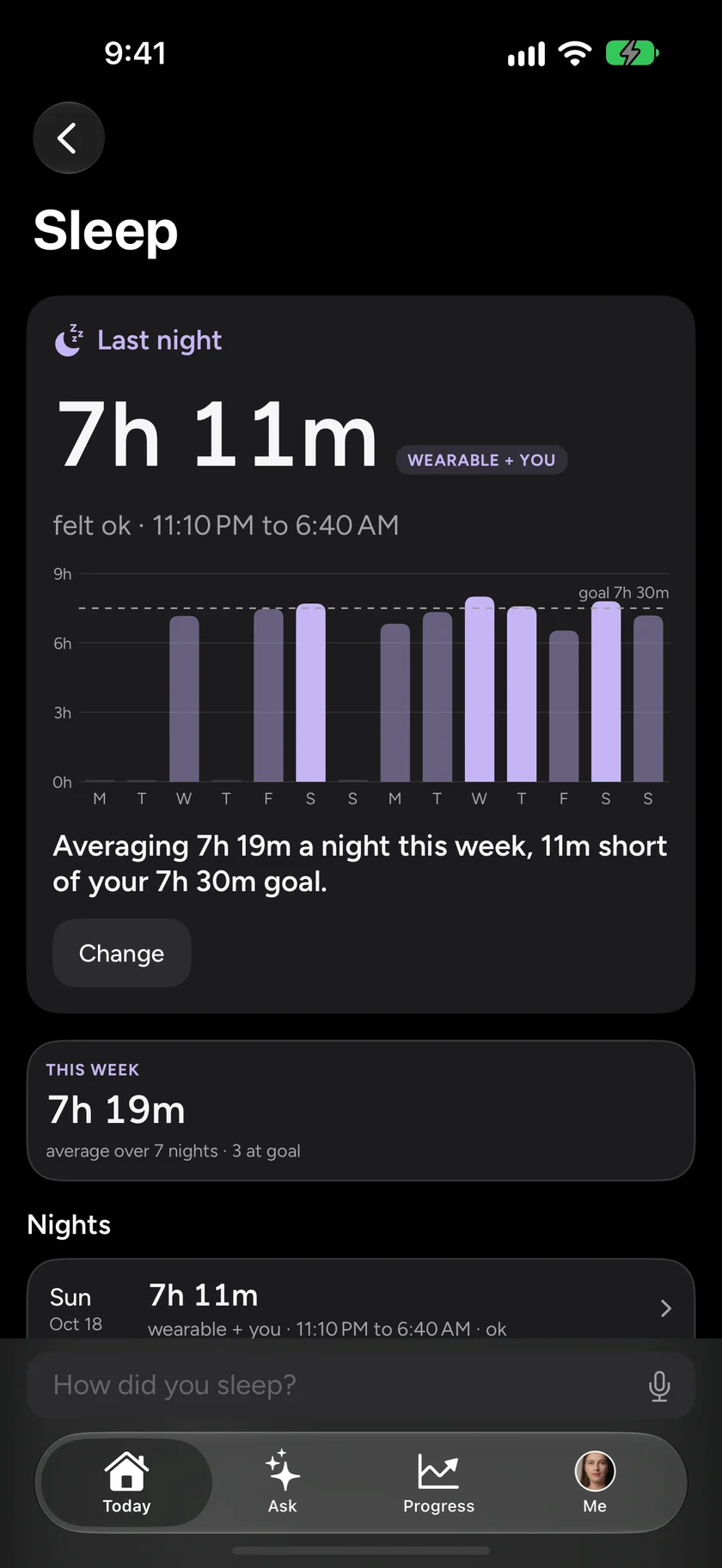
Sleep shows last night and the past two weeks against your goal line, with the two kinds of information labeled separately: what a wearable measured (duration and stages) and what you said (how it felt, when you went to bed). The morning check-in asks how you slept on a scale from Awful to Deep. A warm night tends to leave a mismatch between those two: the device counts a normal length of sleep, and you rate it a 2.
If you wear a WHOOP, its skin temperature is among the readings Wave receives, beside sleep stages, HRV and resting heart rate. A warm night can also nudge your overnight heart rate up, since keeping cool is work for the heart too. Today’s Wave reads sleep, HRV and resting heart rate against your own 30-day baseline, so a run of warm nights tends to show up as a lower morning score before you have connected it to the room.
Test your own bedroom
The honest way to settle it is an experiment, because one night tells you almost nothing (one bad night is weather). Try this:
- Keep two weeks as you are, and note the bedroom temperature in the check-in note each night.
- Then lower it by a few degrees for two weeks, or swap to lighter bedding, or take a warm shower an hour before bed. Change one thing, not three.
- Keep the check-in going every morning so your rating has a full run behind it.
- Compare the two stretches on the Sleep chart and in your check-in ratings.
If the cooler two weeks read better, you have your answer from your own nights rather than from an average sleeper. If they read the same, the room was not the problem, which is also worth knowing. Insights looks for patterns across your own record, but the cleanest evidence is still the side-by-side you set up on purpose.
Wave cannot tell you why a particular night went badly, and a two-week comparison is not a controlled trial. Stress, alcohol, a late meal or a partner who runs hot can all move the same numbers. Change one thing at a time and you will learn more than any single score can tell you.
Wave Wellness is free on the App Store and Google Play. Download it and see your own nights today.
Wave is for general wellness and is not a medical device. It does not diagnose or treat anything; talk to a doctor about night sweats or sleep that stays poor whatever you change.